
Dune turns three hardware keys into AI workflows
Project Mirage’s Dune keypad offers a narrower AI hardware thesis: simple physical controls paired with software-generated, app-specific workflows.
Not every AI hardware company needs to replace the smartphone. A smaller opportunity may be to build a simple physical interface that becomes more useful as software capabilities expand.
What happened
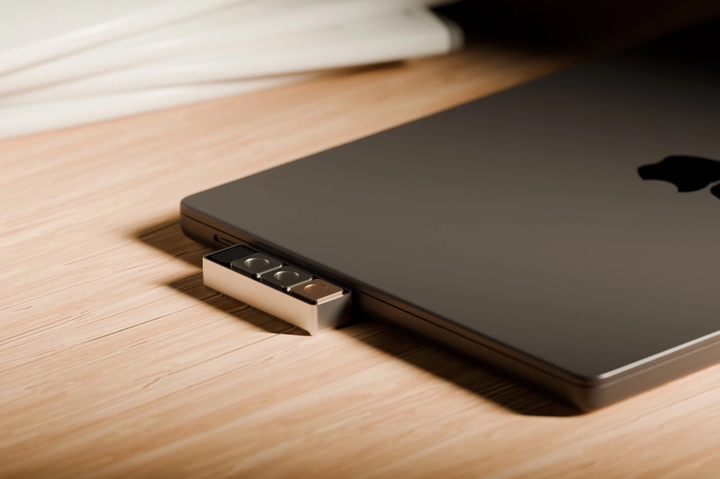
Project Mirage has introduced Dune, a compact three-key MacBook keypad priced at $119 initially, with a planned price of $149.
The controls change depending on the application in use. Its companion software can use Claude Desktop to generate custom shortcuts from plain-language instructions, and the startup is building a marketplace where users can share and discover additional skills.
That makes the device less like a fixed keyboard accessory and more like a physical front end for configurable software workflows.
Why it matters
The interesting part is not the number of buttons. It is the product model.
Many AI hardware attempts have tried to create a completely new computing category. Dune takes a narrower path: keep the hardware simple, then let software and AI expand what the device can do.
That could be a more practical way to build consumer AI hardware because the value can improve after purchase. Users do not need a new device for every workflow; they can add new actions through software.
The marketplace angle also matters. If users create and distribute useful skills, the product could gain a lightweight ecosystem rather than remaining a one-purpose accessory.
The bigger picture
AI is reopening the question of how people interact with computers. Voice, agents and generated interfaces are all challenging the assumption that every task should begin with a mouse, keyboard or app menu.
Dune is a small experiment in that shift. Its broader signal is that AI hardware may work best when it augments existing devices with programmable physical controls instead of trying to replace the entire computing stack.