
Claude Share Links Appearing in Google Search Revealed a Privacy Design Gap
Some publicly shared Claude chats and Artifacts appeared in Google results, showing how link-based sharing can become more public than users expect.
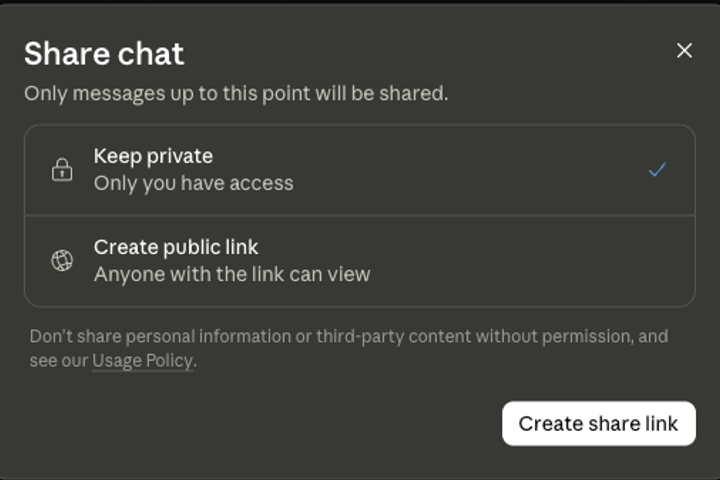
“Anyone with the link” can feel private. In practice, a link can become publicly discoverable if it is posted on a page that search engines are able to crawl.
That gap between technical behaviour and user expectation has now surfaced around Claude.
What happened
Some Claude chats and Artifacts shared through public URLs appeared in Google search results. TechCrunch reported that certain indexed pages contained information users may not have expected to surface through search.
Anthropic said a shared page becomes discoverable only when its public link is posted somewhere accessible to search crawlers. The company also said the URLs cannot simply be guessed.
This has not been established as a breach of Anthropic’s private systems. The issue concerns content that users chose to make accessible through a public sharing link and that later became exposed to search indexing.
Why it matters
People frequently use AI assistants for work notes, code, research and personal questions. They may share an output with one colleague while assuming the URL remains difficult for anyone else to find.
But a public link has no account-level access control. If it is added to a public webpage, forum, analytics log or another crawlable location, a search engine may discover it.
Clear product language therefore matters. Interfaces should distinguish between a page that is genuinely restricted to selected recipients and one that is publicly accessible but not immediately advertised.
The bigger picture
AI products are becoming repositories for increasingly sensitive context. Privacy depends not only on model training policies, but also on ordinary product features such as sharing, permissions and search indexing.
The Claude case is a reminder that secure defaults and precise warnings can be as important as sophisticated cybersecurity controls.