
China Starts Building Its Own ASML Alternative
A Chinese state-owned company has reportedly begun producing domestic immersion DUV lithography machines, targeting one of the country’s most important semiconductor bottlenecks.
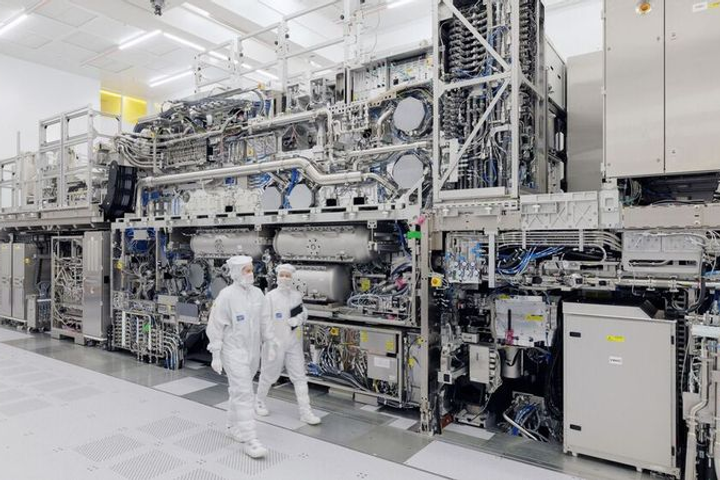
China can design increasingly capable chips, but manufacturing them still depends on a small number of foreign tools. Domestic lithography production is an attempt to weaken that dependency.
What happened
Reuters reports that state-owned Shanghai Aishengna has begun producing Chinese-developed immersion deep-ultraviolet lithography machines.
The company reportedly plans to deliver machines to SMIC, Hua Hong and CXMT. Approximately five units are targeted for this year and 20 for 2027, according to an unnamed source familiar with the effort.
Lithography machines project extremely detailed patterns onto silicon wafers. Immersion DUV uses liquid between the lens and wafer to improve resolution. It is an older generation than the extreme-ultraviolet tools used for the most advanced chips, but sophisticated DUV systems can still produce important semiconductor nodes through multiple patterning.
Why it matters
ASML dominates advanced lithography and is subject to Western export controls. A domestic DUV system could give Chinese chipmakers a fallback if access to imported machines, parts or servicing becomes more restricted.
The development also illustrates how controls can encourage investment in local alternatives. Lithography is not one product but a network of optics, light sources, precision motion, chemicals, software and process knowledge. Building a machine is therefore only one step toward an independent manufacturing stack.
The bigger picture
Production does not mean the tools are ready for reliable high-volume manufacturing. Chipmakers care about yield, uptime, throughput and consistency across millions of wafers. A machine that can print a pattern in testing may still be uneconomic on a production line.
The report relies on an unnamed source, while Aishengna and the prospective customers did not comment. Its manufacturing readiness is therefore not independently verified enough.
Even with those caveats, the signal is strategically important. If China can gradually replace foreign DUV equipment, export controls may delay its progress without permanently blocking it. The next evidence to watch is not a delivery target, but verified installation, customer qualification and sustained production yield.