
Centralize Raises $19M for Revenue Intelligence
Centralize raised $19M to build relationship intelligence for enterprise revenue teams, pointing to AI moving deeper into go-to-market workflows.
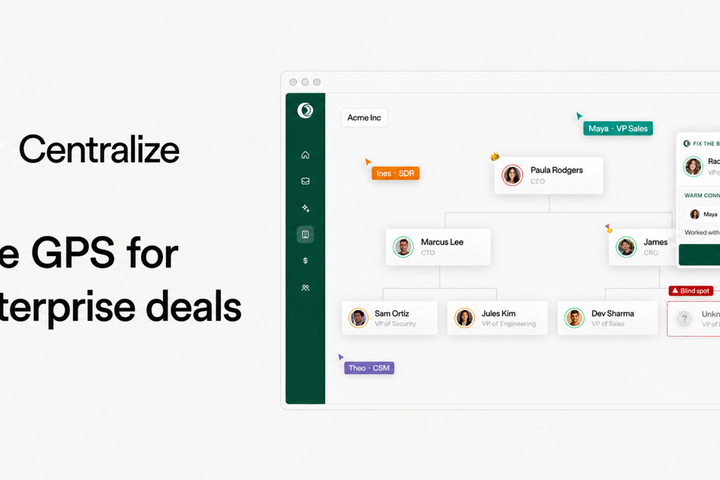
CRM systems are full of data, but sales teams still spend a lot of time guessing which relationships matter, which accounts are warming up and who can open the right door. Centralize is targeting that messy middle layer.
What happened
Centralize raised $19M in total funding led by NEA.
The company is building a relationship-intelligence platform for enterprise revenue teams. In plain English, that means software that helps sales, customer-success and go-to-market teams understand the relationship graph around accounts: who knows whom, which interactions matter, where there may be a warm path into a company, and where a deal may be gaining or losing momentum.
That sits next to, rather than replacing, traditional CRM software. The value is not just storing account records. It is turning fragmented relationship data into practical recommendations for revenue teams.
Why it matters
This is a useful enterprise-software signal because AI is moving beyond generic sales-assistant features.
A lot of sales AI is still shallow: email drafting, meeting notes, call summaries and basic lead scoring. Relationship intelligence is more interesting because it tries to map context, history and trust — things that are often invisible inside standard CRM fields.
If it works, the ROI is clear. Sales teams can prioritise better accounts, avoid cold outreach when a warm path exists, and reduce time wasted on weak opportunities.
The bigger picture
The go-to-market software stack is being rebuilt around data that used to live informally inside people’s heads, inboxes, calendars and networks.
For investors, the question is whether companies like Centralize become a new system of intelligence around revenue, or whether larger CRM and sales-engagement platforms absorb the same features. The category is crowded, but the pain point is real: enterprise sales is still relationship-driven, and AI is now trying to make that relationship graph visible.