
Calendly Enters AI Meeting Notes
Calendly’s note-taking launch shows scheduling platforms moving downstream into post-meeting workflow automation.
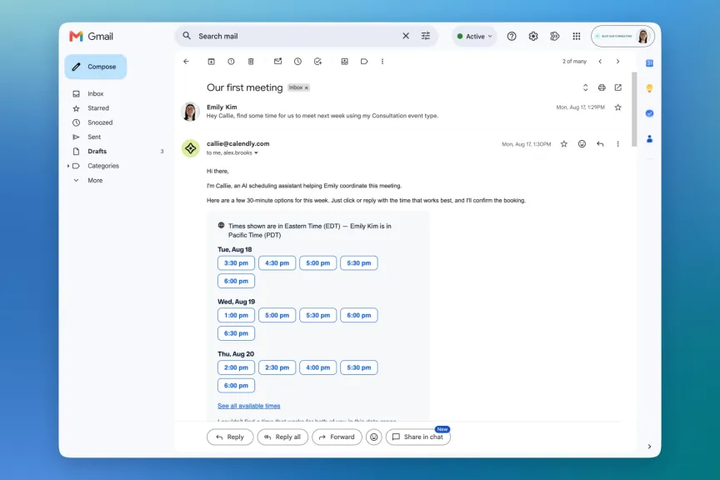
Calendly’s AI meeting product is not the strongest item in the batch, but it shows a useful enterprise-software trend: scheduling tools are moving deeper into the meeting workflow.
What happened
Calendly launched a meeting note-taking product that records, transcribes, summarises and drafts follow-up emails from meetings.
The company is also planning an AI assistant called Callie that uses Calendly’s scheduling stack to set up meetings, check availability and surface context.
This expands Calendly beyond its original wedge of booking meetings. The company is trying to own more of the before-and-after workflow: scheduling, context, notes, summaries and follow-up.
Why it matters
AI meeting tools are crowded. Many products already record calls, generate summaries and draft action items. Calendly’s advantage is that it starts from the scheduling layer, where it already has intent, participants, timing and meeting context.
That gives it a natural route into workflow automation. If a product knows why a meeting is happening, who is attending and what should happen afterward, it can become more useful than a standalone transcription tool.
Still, this is a product expansion rather than a major financing or strategic transaction. It is push-worthy mainly as a signal of how productivity platforms are trying to defend and expand their surface area in the AI era.
The bigger picture
The meeting-AI category is consolidating around workflow ownership. Recording and summarising are becoming baseline features, not standalone companies by default. The next battleground is whether platforms can connect meetings to calendars, CRM systems, emails and follow-up actions. Calendly’s move shows scheduling software becoming a broader automation layer for work coordination.