
Body Vision Raises Funding for AI Lung Imaging
Body Vision Medical’s new funding is a practical healthtech signal: AI is moving into imaging guidance for real clinical procedures.
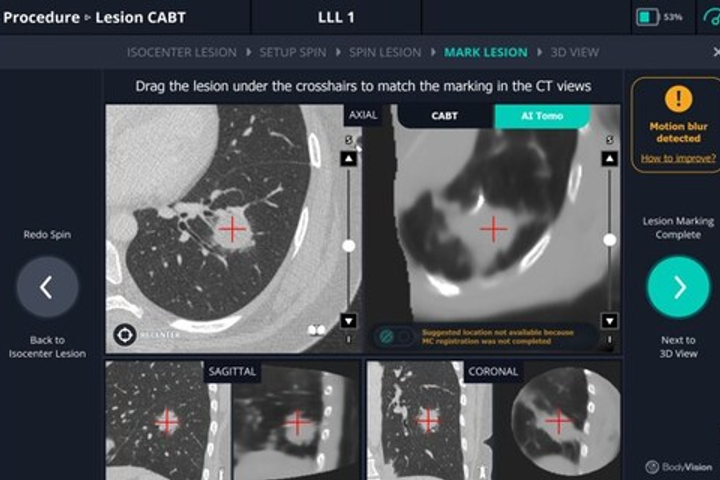
Some of the strongest healthcare AI use cases are not replacing doctors. They are helping clinicians see, guide and decide more accurately.
What happened
Body Vision Medical closed a new funding round to support its AI-powered real-time image guidance technology. The company focuses on early lung cancer diagnosis and minimally invasive treatment of lung lesions.
The amount was not disclosed, so the financing signal is less clear than a priced venture round. The product signal is more important: Body Vision is building around a specific clinical workflow rather than offering a general-purpose healthcare chatbot.
Why it matters
Lung cancer is often difficult to diagnose early because small lesions can be hard to access safely and accurately. Better image guidance could help clinicians navigate procedures with more confidence, especially when working inside the lung where precision matters.
This is where healthcare AI tends to be more credible: narrow, workflow-specific tools with a defined user, clinical setting and measurable outcome.
The bigger picture
The AI-in-healthcare story is splitting into two tracks. One is administrative automation. The other is deeper clinical infrastructure, where AI supports imaging, diagnostics, procedure planning and lab workflows. Body Vision sits in that second category — harder to build, slower to validate, but potentially much more defensible if it works.