
Axelspace puts seven Earth-observation satellites into orbit
Axelspace’s seven-satellite deployment expands commercial Earth-observation capacity and marks a concrete constellation-scale milestone.
Commercial space companies are moving from single-satellite launches toward larger constellation deployments that can support recurring data services.
What happened
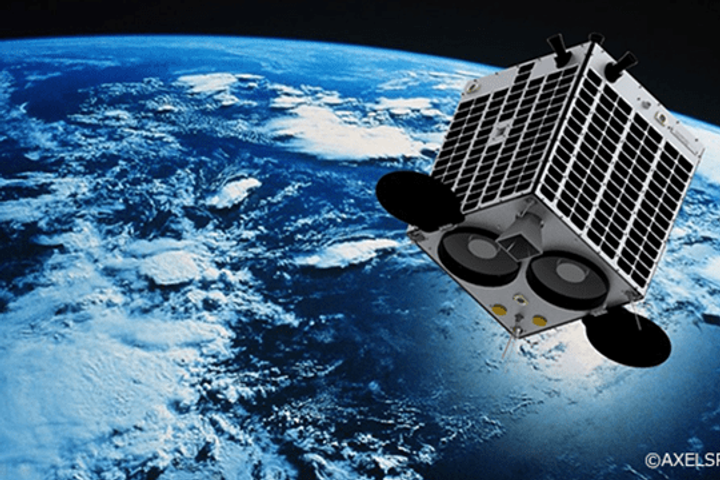
Axelspace announced that all seven of its next-generation GRUS-3 Earth-observation satellites had been successfully launched and that first radio signals had been received from all seven.
The spacecraft launched aboard SpaceX’s Transporter-17 mission, reached their intended orbit and were reported as operating normally.
Why it matters
Adding seven satellites at once can materially expand observation capacity.
For Earth-observation businesses, value depends on revisit frequency, data availability and the ability to deliver consistent services rather than simply placing one spacecraft in orbit.
This is therefore a concrete infrastructure milestone rather than another future launch plan.
The bigger picture
Smaller commercial satellite constellations are becoming a core layer of the space economy.
Companies increasingly compete on recurring data products across areas such as agriculture, infrastructure and environmental monitoring. Axelspace’s deployment strengthens that shift from bespoke missions toward scalable observation networks.