
Astra and Claude Crack Enigma Messages
Frontier AI models were used by cryptanalysts to solve previously unbroken Enigma-machine messages.
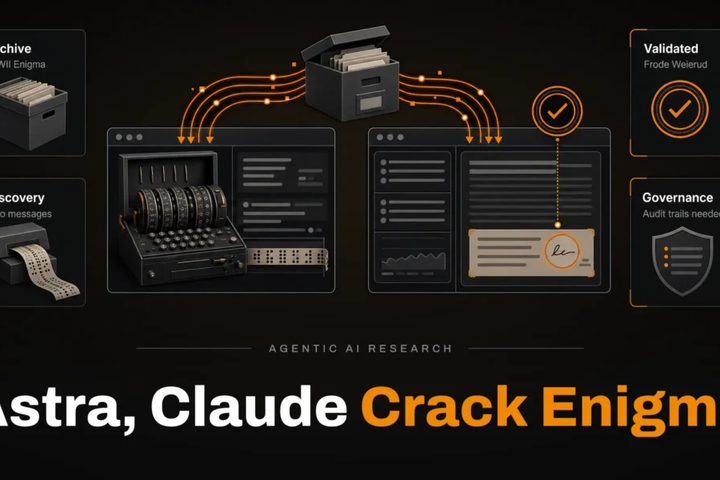
Frontier AI models are beginning to look less like answer engines and more like research assistants that can coordinate tools, search and reasoning.
What happened
OpenAI’s Astra and Anthropic’s Claude Opus 5 were used by cryptanalysts to solve previously unbroken Enigma-machine messages.
One model run searched archival material, built an Enigma simulator and recovered plaintext from a message that had remained unsolved since 2005. A second message was solved with another frontier model and more human guidance.
The work was not a commercial product launch, but it demonstrated model capability in a research-style workflow.
Why it matters
The interesting part is not simply that AI helped solve a puzzle.
The models contributed across multiple steps: gathering context, using historical constraints, building tools and assisting with reasoning. That is close to the workflow many companies want from agentic AI in research, engineering and analysis.
The bigger picture
AI capability is increasingly measured by whether models can complete multi-step work, not only by whether they can answer questions.
Historical cryptanalysis is a niche domain, but the pattern is relevant: tool use, search, simulation and human collaboration are becoming central to the next generation of AI systems.