
AI Designs 16 Bacteria-Killing Viruses
Researchers used genome AI models to design functional bacteriophages, showing how AI biology is moving from prediction toward biological design.
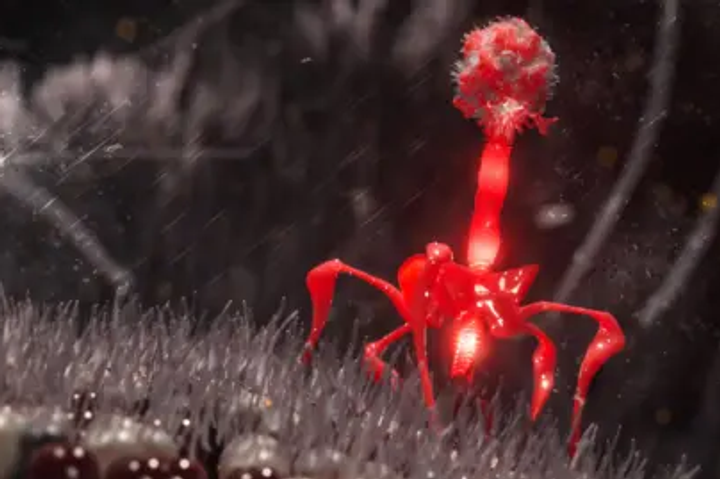
This is not a story about AI creating a human virus. It is a much more specific — and still very important — biotech signal: AI models have now helped design functional bacteria-killing bacteriophages.
What happened
Researchers used genome AI models, including Evo 1 and Evo 2, to design new synthetic bacteriophage genomes. Bacteriophages are viruses that infect bacteria, not humans.
In lab testing, 16 designs became functional phages that could propagate and inhibit the growth of the target bacterial strains. The work matters because the model was not only predicting whether a biological sequence might work. It was helping generate whole viral genomes that could then be tested experimentally.
The safety framing is important. The work focused on bacteriophages, and the researchers emphasised that human-infecting viral systems were excluded from the relevant training and safety process. So the accurate framing is AI-designed bacteria-targeting viruses, not “AI created a new human virus.”
Why it matters
This is a milestone for AI biology because it pushes the field from reading biology toward writing biology.
Most AI drug-discovery stories are about finding molecules, predicting protein structures, or screening candidates faster. This story is different: it points to AI as a design tool for larger biological systems. If the approach improves, it could eventually support phage therapy, where bacteria-targeting viruses are used against infections that resist traditional antibiotics.
That is why the story is both exciting and uncomfortable. The positive use case is clear: better tools against antibiotic-resistant bacteria. But the same category of technology also raises governance questions, because biological design capabilities can become more powerful faster than the rules around them.
The bigger picture
AI biotech is entering a new phase. The frontier is no longer just “can AI understand biology?” It is becoming “can AI help design biological systems that work in the lab?”
That shift could create a new generation of biotech startups around programmable biology, phage therapy, synthetic genomics and lab-in-the-loop experimentation. But it also means biosecurity cannot be treated as an afterthought. The winning companies in this category will need not only strong models, but also careful validation, safety boundaries and credible governance from day one.