
AI data centres expose a new grid-stability risk
A sudden 3.1GW drop in data-centre demand showed that AI campuses can destabilise the grid when large facilities switch to backup power at the same time.
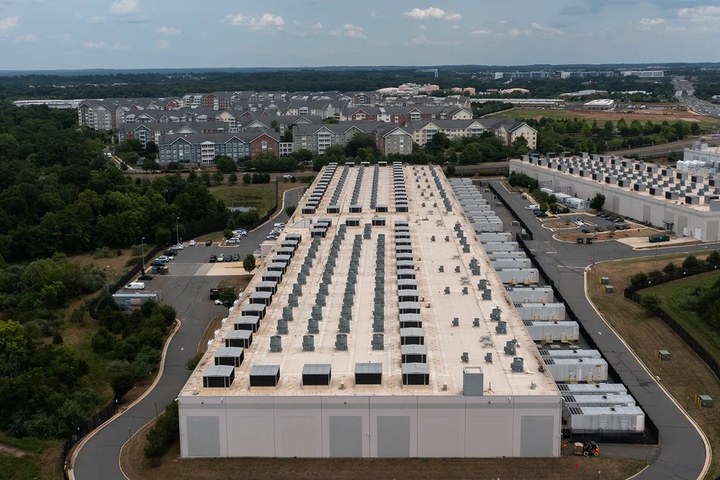
AI data centres are usually discussed as a problem of electricity supply. A recent grid disturbance showed that their behaviour during an outage can be just as important as how much power they consume.
What happened
A transmission-line failure near Washington, DC caused multiple data centres to transfer rapidly onto backup power. Around 3.1GW of electricity demand disappeared from the PJM grid in roughly 30 seconds.
The event did not cause a blackout, but it created voltage disturbances across a wide region and took more than ten minutes to stabilise. At the time, the affected facilities represented roughly 3% of total demand on the grid.
The issue was not that one data centre used too much electricity. It was that many large facilities responded to the same disturbance in almost the same way and at almost the same moment.
Why it matters
A cluster of AI campuses can behave like one enormous industrial load. If several facilities disconnect at once, generators suddenly produce more power than the grid needs. If they reconnect together, demand can surge just as quickly.
That means grid operators may need data centres to manage backup systems, batteries and computing workloads in a more coordinated way.
The bigger picture
The infrastructure challenge around AI is expanding beyond obtaining enough power. Data centres may also need to become active grid participants—reducing demand gradually, restoring it in stages and using batteries to smooth sudden changes.
This creates opportunities for companies building grid-responsive computing, energy-management software and data-centre storage. It also means power-system design will increasingly shape where and how quickly new AI capacity can be deployed.